
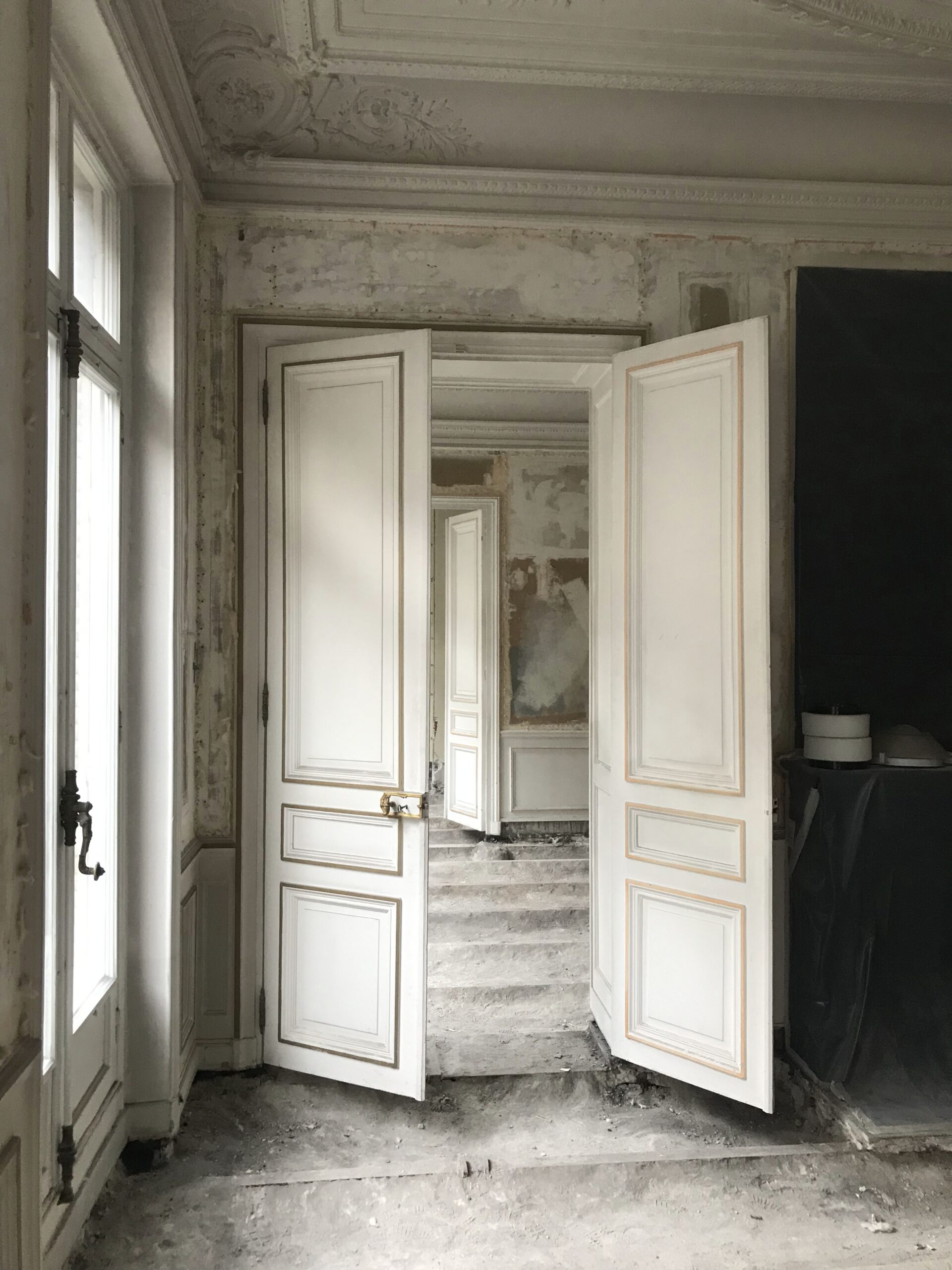
General Contractor in Paris: How to Choose One and What They Guarantee
Renovating a Haussmann-style apartment, a private mansion or a retail space in Paris quickly involves around ten different trades, several design professionals and constraints specific to the building. Entrusting the entire project to a general contractor in Paris means appointing a single point of contact who is contractually responsible for the outcome, deadlines and compliance of the work. This guide explains what this role entails, how it differs from that of a project manager, and which criteria should be used to make an informed choice.
Qu’est-ce qu’un contractant général à Paris ?
Un contractant général à Paris est un professionnel qui prend en charge l’intégralité d’un projet de rénovation ou de transformation immobilière dans le cadre d’un contrat unique. Il ne se limite pas à coordonner : il s’engage envers le client sur l’exécution de l’ensemble des lots, qu’il réalise lui-même ou confie à des artisans qu’il sélectionne et dont il répond.
The term is commonly used in high-end renovation, where it refers to a role similar to that of a general construction company, combined with broader project management responsibilities. In public procurement, however, the term refers to a specific legal framework. For a private individual or investor, the key point is to check what the contract actually covers: scope of work, price, schedule and responsibilities.
General contractor, project manager, general construction company: what are the differences?
These three concepts are often confused, even though they involve different commitments.
The project manager designs or supervises the project: drawings, contractor selection, site management and monitoring. They do not carry out the work themselves. The client therefore signs separate contracts with each company and remains responsible for their financial and legal coordination, even when supported by a project manager.
A general construction company signs a single contract with the client covering the entire project, then brings in the various trades, often through subcontracting. The client therefore has only one contractual partner for the execution of the work.
A general contractor, as the term is commonly used in high-end renovation, combines these two dimensions: they provide construction project management — including meetings, monitoring and financial reporting — as well as the execution of the work itself, most often working alongside the architect or designer who originated the project. The client retains a single point of contact for the work, schedule and budget.
Mission du contractant général à Paris : de l’état des lieux à la livraison
La mission d’un contractant général à Paris commence avant le premier coup de masse. Elle comprend en général un constat d’huissier avant travaux, utile vis-à-vis de la copropriété et des voisins, puis la préparation du chantier : protection des parties communes, planning, autorisations, coordination avec l’architecte, le bureau d’études et le bureau de contrôle lorsque la structure est concernée.
The technical and architectural trades then follow: demolition, including load-bearing walls and structural elements under the supervision of a structural engineer, masonry and screeding, plumbing, electrical work, home automation, underfloor heating or air conditioning. These are complemented by finishing work: hard finishes such as marble, ceramic or parquet flooring, decorative plaster, stucco, fitted joinery and bespoke furniture.
Throughout the project, the general contractor organizes meetings, monitors decisions, keeps the project’s financial information up to date and flags deviations before they turn into disputes. At completion, they organize the handover and address any outstanding defects or snagging items.
Contractant général à Paris : pourquoi le contexte change la donne
A construction project in Paris cannot be managed in the same way as one on the outskirts of the city. The vast majority of properties are part of condominium buildings: any work affecting common areas, the structure or the external appearance generally requires approval from the condominium’s general meeting and compliance with the condominium rules. Changes to a façade or windows may require a prior declaration, and in protected areas, the opinion of the French Heritage Architect (Architecte des Bâtiments de France) may also be required.
La logistique pèse également sur les délais : accès restreints, horaires de travaux encadrés, livraison de matériaux lourds dans des immeubles anciens sans ascenseur adapté, évacuation des gravats. Enfin, le bâti ancien, avec ses planchers, ses moulures, ses cheminées et ses réseaux hétérogènes, impose des diagnostics précis et une adaptation constante. Un contractant général à Paris expérimenté anticipe ces points dès le chiffrage, au lieu de les découvrir en cours de chantier.
Responsabilités et garanties à exiger d’un contractant général à Paris
The main advantage of having a single point of contact is the clarity of responsibilities. Several statutory guarantees apply to construction and major renovation work:
La garantie décennale (article 1792 du Code civil) couvre pendant dix ans à compter de la réception les dommages qui compromettent la solidité de l’ouvrage ou le rendent impropre à sa destination. La garantie biennale concerne, pendant deux ans, le bon fonctionnement des éléments d’équipement dissociables. La garantie de parfait achèvement oblige l’entreprise à reprendre, pendant un an après la réception, les désordres signalés.
The contractor must have insurance covering these guarantees. Before signing, request a valid insurance certificate and check that the declared activities correspond to the work planned. You should also enquire about structural damage insurance (assurance dommages-ouvrage), which must be taken out before construction begins for the relevant works, as well as any insurance specific to particular structures. For precise guidance regarding your situation, your insurer or a lawyer specializing in construction law remains the appropriate point of contact.
How to choose a general contractor in Paris
Quelques vérifications permettent d’écarter les mauvaises surprises lors du choix d’un contractant général à Paris. Commencez par les réalisations : des projets comparables au vôtre, en taille, en type de bien et en niveau de finition, avec des références que vous pouvez vérifier, idéalement en rencontrant des clients ou des architectes qui ont déjà travaillé avec l’entreprise.
Then examine the quality of the quotation. A serious quotation should be broken down by trade, specify the materials, distinguish what is included from optional items and provide a schedule. A single global price without a detailed breakdown makes comparisons — and any subsequent changes to the contract — difficult to control.
Check how the project will be managed: who will be present on site, how frequently, how decisions and modifications will be recorded, and how the budget will be monitored. Finally, assess the company’s ability to work with your architect or interior designer, as the quality of a high-end project depends heavily on faithful execution of the plans and prototypes.
In Summary
Hiring a general contractor in Paris makes sense when a project involves multiple trades, structural work, condominium requirements or a historic building. Having a single point of contact simplifies project management, provided that the contract clearly defines the scope, price, schedule and responsibilities. Before committing, compare several detailed quotations, check insurance certificates and meet the teams who will be overseeing your project.
Pour approfondir, consultez nos pages sur les services de contractant général et de maîtrise d’œuvre et nos articles sur la rénovation haut de gamme.
Frequently Asked Questions About General Contractors
What is the difference between a general contractor and an architect?
The architect designs the project, submits applications for the necessary permits and may oversee the construction work. The general contractor carries out or arranges for the work to be carried out and is contractually responsible for it. The two often work together on high-end projects.
Le contractant général s’occupe-t-il des autorisations de copropriété ?
La demande d’autorisation à l’assemblée générale relève du propriétaire, mais le contractant général peut fournir les éléments techniques nécessaires et conseiller sur le calendrier, en particulier lorsque des murs porteurs ou des parties communes sont concernés.
Does the general contractor handle condominium approvals?
The application for approval from the condominium’s general meeting is the owner’s responsibility. However, the general contractor can provide the necessary technical documentation and advise on the appropriate schedule, particularly when load-bearing walls or common areas are involved.
This article is provided for general informational purposes only. It has no contractual value and does not constitute an offer, quotation or commitment by its publisher. It cannot replace a written contract signed by the parties. Information relating to regulations, guarantees, insurance and planning or condominium approvals is provided as of the publication date, may change over time and does not constitute legal, tax, technical or insurance advice. As each project has its own specific characteristics, it is recommended that you consult a lawyer, notary, architect, insurer or other qualified professional before making a decision. The publisher accepts no liability for any use made of this information. The cited legislation, including Articles 1792 et seq. of the French Civil Code, should be checked against the version currently in force.